
Grassroots Groups Mobilize Across Los Angeles After U.S. and Israel Bomb Iran
Protesters denounce escalating war and demand an immediate halt to U.S. military intervention. Calling on the White House to stop bombing Iran and to impose an arms embargo on Israel.

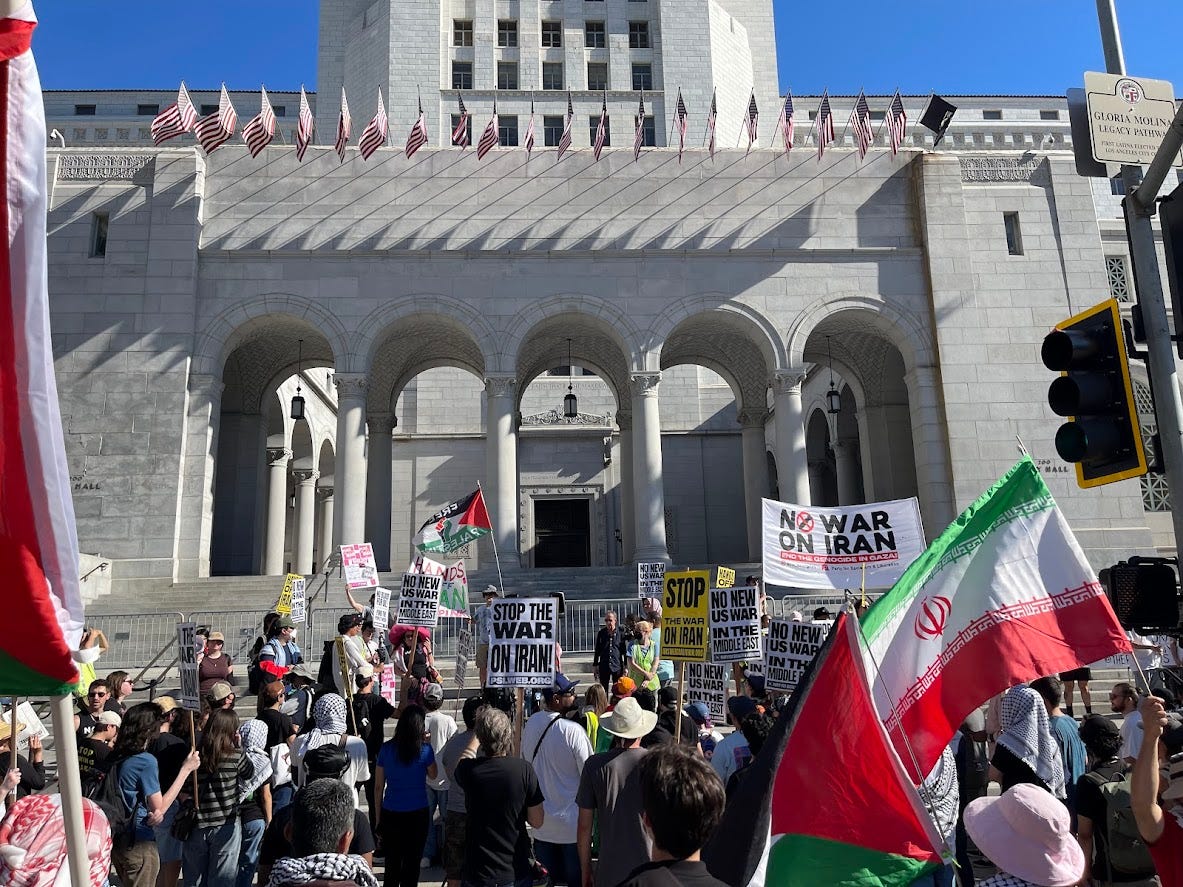
Over the weekend, grassroots organizations mobilized to protest against the news that the United States and Israeli government have launched a war against Iran by bombing fourteen locations across the country. The action is what President Donald Trump described as “major combat operations” across the country, which is home to roughly 91.57 million people.
Fars News Agency reported that the attack killed Iran’s supreme leader, the Ayatollah Ali Hosseini Khamenei, his wife, his daughter, his son-in-law, and his granddaughter. In addition, the U.S. and Israel bombed an all-girls school while in session, and the death toll now stands at 148, mainly young schoolgirls. The illegal attack also claimed the lives of Iran’s Armed Forces Chief of Staff, Defense Minister, and Islamic Revolutionary Guard Corps commander, largely wiping out a generation of top military and political leadership.
“I am here in the streets to stand firmly against US/Israeli attacks on Iran,” said Shany Ebadi, an Iranian American and organizer with the Party for Socialism and Liberation (PSL). “There is no conviction that the US cares about democracy in Iran, the US does not care about women’s rights in Iran, this is nothing more than blatant military imperialist aggression against the people of Iran, and we are here to demand no Iran with Iran, and demand an end to the sanctions on Iran,” she added.
One protest was held on Saturday at City Hall, organized by the Palestinian Youth Movement, Code Pink, Democratic Socialist of America (DSA L.A.), 50501 SoCal, the ANSWER Coalition, and the Party for Socialism and Liberation. The action was part of a nationwide movement in over 60 cities across the United States, said Brian Becker, National Director of the ANSWER Coalition, at the rally.
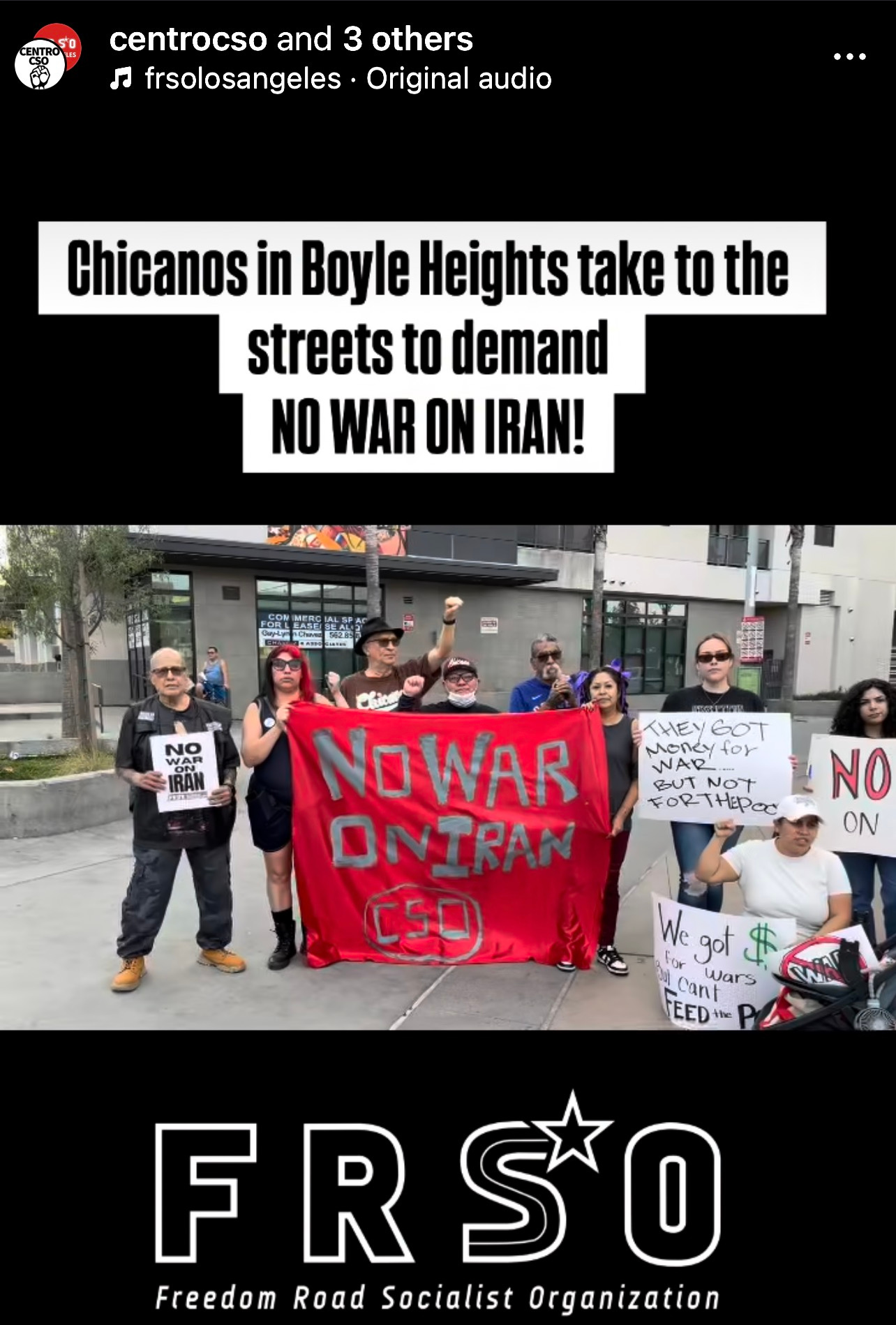
On Sunday, the Centro Community Service Organization (CSO) and the Freedom Road Socialist Organization (FRSO) organized a protest at 1st Street and Soto in Boyle Heights. “The Shah was put in power by the U.S.,” stated Carlos Montes, a Chicano organizer with the FRSO.
The U.S. Wants Regional Control
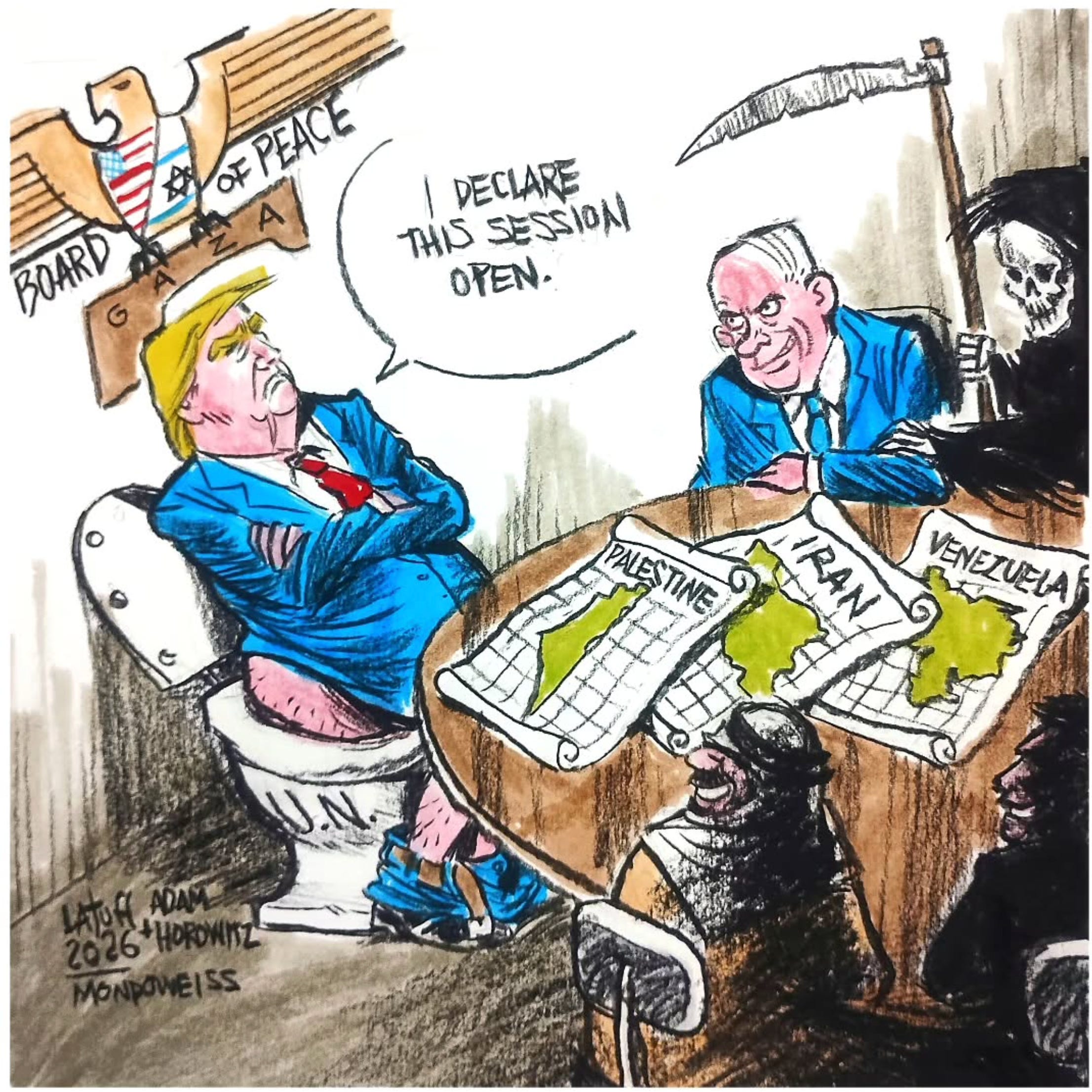
The United States has a long history of intervening in Iran’s internal politics to establish a puppet regime for its imperial ambitions. From 1953 to 1979, Iran was ruled by the United States through Mohammad Reza Pahlavi.
An examination of that period shows that the U.S. sought to impose a neo-colonial dictatorship on the Iranian people. That is why we are told to dislike Iran’s political and religious leadership and system, while remaining silent about neighboring countries like Jordan, Saudi Arabia, Oman, the United Arab Emirates (UAE), Qatar, Bahrain, and Kuwait.
Based on U.S. corporate media reporting and what the White House tells us, we can have strong relationships with regional brutal monarchies but not friendly ones with the Iranian government, and this is by design.
At the same time, we are told that Israel’s government is our ally and the only “democracy” in the Middle East.
There is a reason for that.
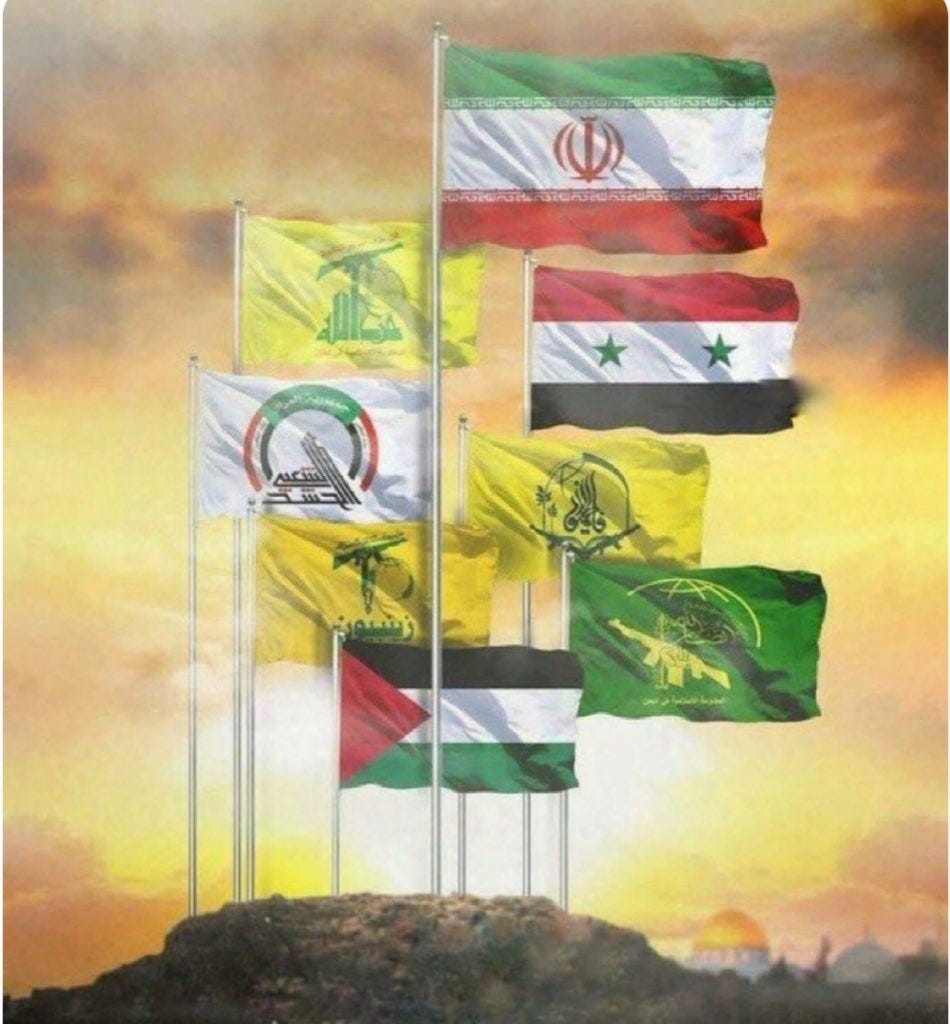
Iran is the only country in the region that is not a U.S. puppet, and the only country in the region that has a national budget to fund, support, and help the Palestinian resistance against the illegal Zionist occupation. Another source of support for the Palestinian resistance in the region is Hezbollah, a Shia Islamist Lebanese political party, and Yemen.
That is why the U.S. and Israel have bombed Lebanon and Yemen but not other regional states. In fact, regional monarchies are used as military bases to surround Iran, as we saw in the twelve-day war in 2025 and are seeing in the latest round of airstrikes.
Iran is a large and powerful country. With nearly ninety-two million people, it has the largest population in West Asia. It holds 4% of the world’s oil reserves and 15% of its gas reserves, ranking third and second globally. In 2023, Iran discovered a large lithium deposit, possibly the world’s second-largest, with reserves of 8.5 million tons, in Hamedan province.
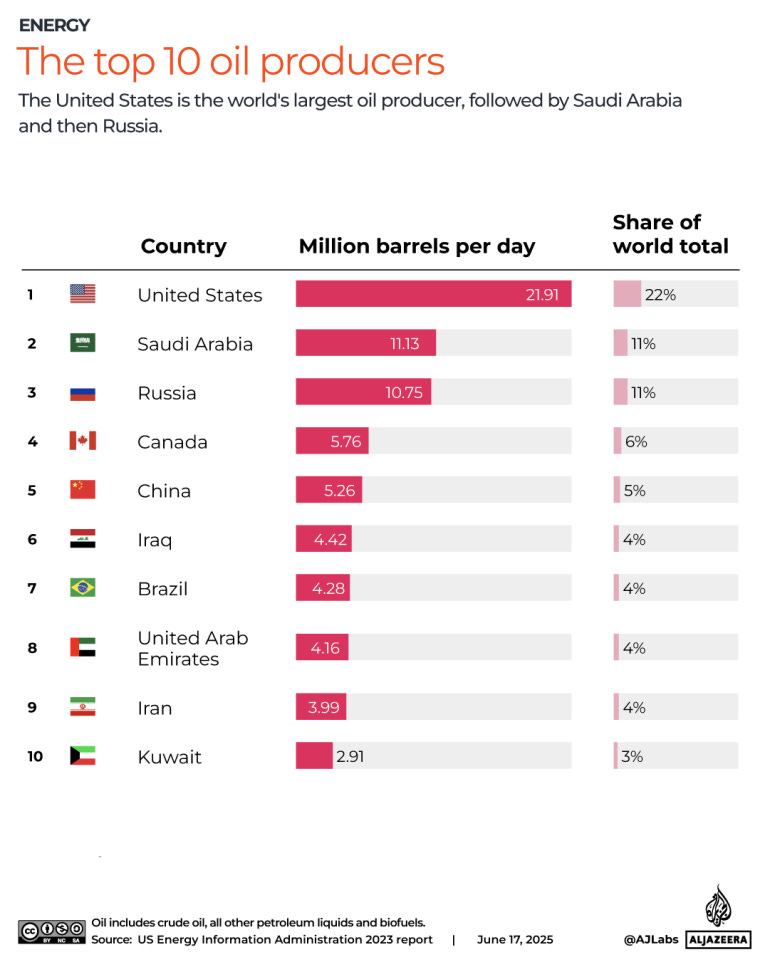
In addition, Iran is home to many minerals and arable land. Iran borders eight countries and has coastlines on two key waterways. Its territorial waters extend twelve miles into the twenty-one-mile-wide Strait of Hormuz, one of the most important waterways in the world, through which a fifth of the world’s ships carrying oil and natural gas pass. Therefore, controlling the flow of fuel is a position no one else holds, except Iran.
Iran’s oil and minerals are technically under state ownership according to the country’s constitution, with major mining and processing (steel, copper, aluminum) owned by the government through the Iranian Mines and Industries Development and Renovation Organization (IMIDRO), which manages large-scale mining operations and state-owned assets. The profits go into the nation’s infrastructure, education, and healthcare.
From 1901 to 1951, the Anglo-Iranian Oil Company (AIOC), formerly the Anglo-Persian Oil Company, controlled all of Iran’s oil. AIOC is now known as British Petroleum (BP). AIOC siphoned off all the oil and profits, leaving the people of Iran in poverty and underdevelopment.
Iran’s Islamic Revolution: A Thorn to U.S. Imperialism in West Asia (Middle East)
World War II took the lives of 70 to 85 million people, leaving European colonial powers much weaker and creating room for colonized people to assert their independence. Iran seized that opportunity in 1951, when the people of Iran voted Mohammed Mossadegh into office as their Prime Minister. As a result, Parliament voted to nationalize the oil industry, which Britain controlled. The move was supported by the people, as widespread dissatisfaction with foreign ownership of Iran’s natural resources was already evident.
After World War II in 1945, the U.S. emerged as the strongest imperialist power because it was the only one not dealing with the devastation of war, since all the fighting took place in Europe. It was at this moment that the current international financial institutions that control world trade were created, and the U.S. holds power within these institutions.
The U.S. dollar officially became the world’s primary reserve currency in 1944, following the Bretton Woods Conference. This agreement established a new international monetary system in which other currencies were pegged to the dollar, which was convertible to gold at $35 per ounce. The World Bank and the United Nations were established in 1945, and the U.S. Central Intelligence Agency (CIA) was formed in 1947 to operate outside U.S. law and be exempt from congressional oversight.
In 1953, the CIA carried out its first coup, successfully overthrowing a democratically elected government, and it bragged about it as “an American project from beginning to end.” The next year, the CIA overthrew Guatemala’s popular president, Jacobo Árbenz. For the next decade, Haiti, Honduras, El Salvador, Panama, the Dominican Republic, Perú, Bolivia, Chile, and Brazil (and many more) fell victim to U.S.-backed CIA coups.
After the 1953 coup, the U.S. installed Mohammed Reza Pahlavi as the monarch, the Shah of Iran. To keep him in power, Washington financed and trained the Bureau for Intelligence and Security of the State (SAVAK), the notorious and brutal secret police, to attack and destroy any popular opposition to the new rulers.
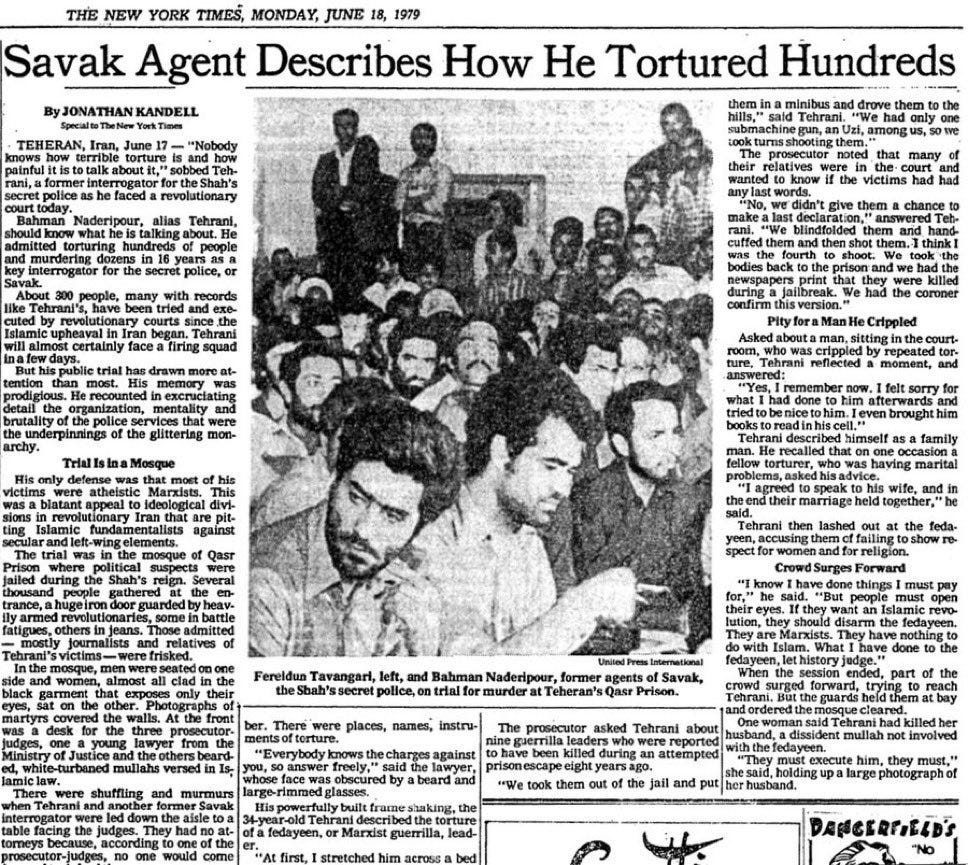
SAVAK was given the freedom and power to make arbitrary arrests, detain people without charges indefinitely, and extract confessions through torture. One of the people the SAVAK detained and tortured was the now martyred Ayatollah Ali Khameini in 1971.
Part of SAVAK’s operations was to outlaw Mosaddegh’s political group, the National Front, by arresting all its leaders. Iran’s communist party, the Tudah (The Masses), was destroyed as well.
The ruling class in the United States was happy, though. A variety of Western companies controlled Iran’s oil through shared contracts. American companies took control of Iranian oil production, capturing the majority of the profits. Politically, Iran is what is stopping Israel from fully colonizing Palestine and completing their “Greater Israel” project, which aims to take land from Syria, Jordan, Egypt, Lebanon, Iraq, and Saudi Arabia.
In 1969, during the Vietnam War, Nixon appealed to Iran, Israel, and Saudi Arabia to defend U.S. interests in the region, as the U.S. military was preoccupied with losing the Vietnam War and lacked the capacity to address both issues. From 1970 to 1978, the Shah of Iran imported roughly $20 billion worth of arms, military services, and ammunition from the U.S. A member of Congress said, “the most rapid build-up of military power under peacetime conditions of any nation in the history of the world.” Iran’s new military hardware was intended to serve as Washington’s watchdog in the Persian Gulf and to safeguard Western companies’ interests.
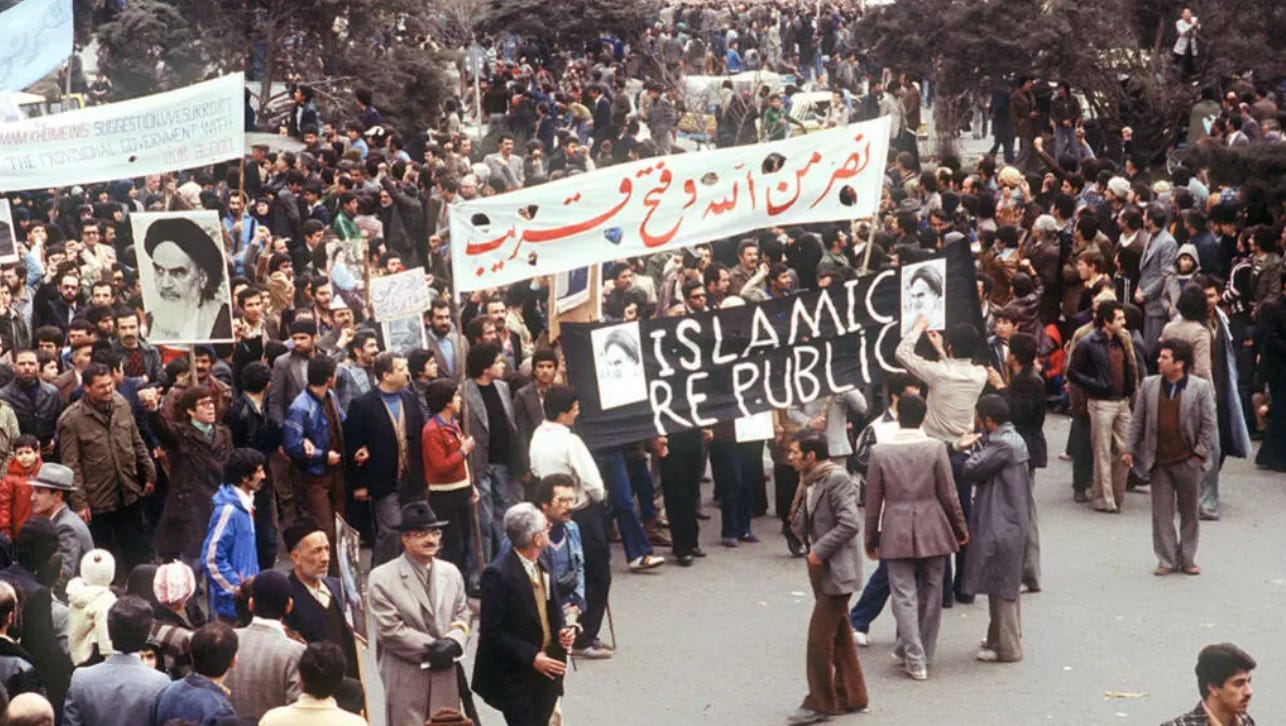
The Iranian Islamic Revolution fundamentally altered the geopolitics of U.S. imperialism in the region. It demonstrated the world’s ability to mobilize its people to overthrow colonial regimes and has served as an inspiration to oppressed groups in the Muslim world and across the Global South.
The revolution changed the balance of power in West Asia. The U.S. has attempted many ways to destroy the revolution through sanctions and assassinations, but the Iranian people still assert their right to self-determination and are aiding others, like Palestine, to do the same.
When It Comes to Israel and the U.S., International Law Vanishes
President Trump and Israel’s Prime Minister Benjamin Netanyahu have publicly stated that their aim in attacking Iran is to kill and remove the Supreme Leader Ali Khamenei. This open call for an assassination against a head of state violates Executive Order 12333, which states, “2.11 Prohibition on Assassination. No person employed by or acting on behalf of the United States Government shall engage in or conspire to engage in assassination.” Therefore, the assassination is illegal under U.S. law.
In addition, U.S. law requires congressional authorization to start wars, which Trump neither sought nor obtained. International law also bars wars of aggression, and Iran posed no direct threat to the U.S. The nuclear question had already been resolved in 2015 by then-President Obama, who verified and had inspectors rigorously inspect Iran’s facilities. Trump repeated the claim that Iran wouldn’t renounce nuclear weapons is a lie designed to sell a war.
Israel is the only country in the region with nuclear warheads. And the U.S. has over 5,000 of them and is the only country in history to drop an atomic bomb on civilians.
Under the United Nations Charter, specifically Article 2(4), states “UN member states are prohibited from using force against the territorial integrity or political independence of another state. An attack is only legal if it falls under the narrow exception of self-defense (Article 51) or is authorized by the United Nations Security Council (UNSC).”
The Trump administration and the Israeli government did not receive UNSC approval and are not under an imminent threat from Iran, making this attack illegal.
The Palestine Question
The U.S. aims to overthrow the Iranian government not just for its oil and natural resources, but because Iran refuses to abandon the Palestinian cause, unlike other Arab countries. “If Iran’s support for the Palestinian resistance had not existed, we would never have achieved this capability. Truly, the Arab Nation has abandoned us. The Arab Nation has abandoned us. They abandoned us in our hardest and most painful moments. While Iran has supported us with weapons, equipment, and expertise,” said Yahya Al-Sinwar, a Palestinian militant and fourth chairman of the HAMAS Political Bureau.
Since the collapse of the Bashar al-Assad government in Syria, which is now ruled by Ahmed al-Sharaa, formerly known as Abu Mohammed al-Julani, who was the former leader of Al-Qaeda in Syria, and a former ISIS prodigy, support for the Palestinian resistance against Zionism falls solely on the Iranian Revolutionary government.
Syria provided key components of communications and transfer of weapons between Iran and the axis of resistance. In large, that is why Israel bombed Syria more than 600 times in 2025, with Israel supporting “its action by claiming to eliminate Iranian military installations” in Syria.
Iran has a long history of supporting the Palestinian resistance against the Zionist occupation and considers it a central pillar of its existence. Today, Iran, Iraq, Hezbollah, and Yemen are the only governments that support the freedom of Palestine from Zionist occupation.
Reza Pahlavi, the opposition figure opposing the current Iranian government and son of the Shah, advocates the opposite approach: he aims to normalize relations with Israel, abandon the Palestinian cause, and restore a monarchical system without presidential elections.
Over the weekend, his movement was cheering because the U.S. and Israel bombed Iran.
To this day, Reza has not run for president in Iran, which holds elections every four years.
How an Anti-War Movement is Taking Shape in Los Angeles
The organizations behind the protest stated that they aim to build a massive anti-war movement to stop the Trump administration from endlessly bombing countries. “It’s been one year into his presidency, and he has bombed ten countries now. And look around you (at the protest). It is working-class people who are outside protesting to stop this. The Democratic Party is nowhere to be seen,” said Rey Ramirez, a South Central resident.
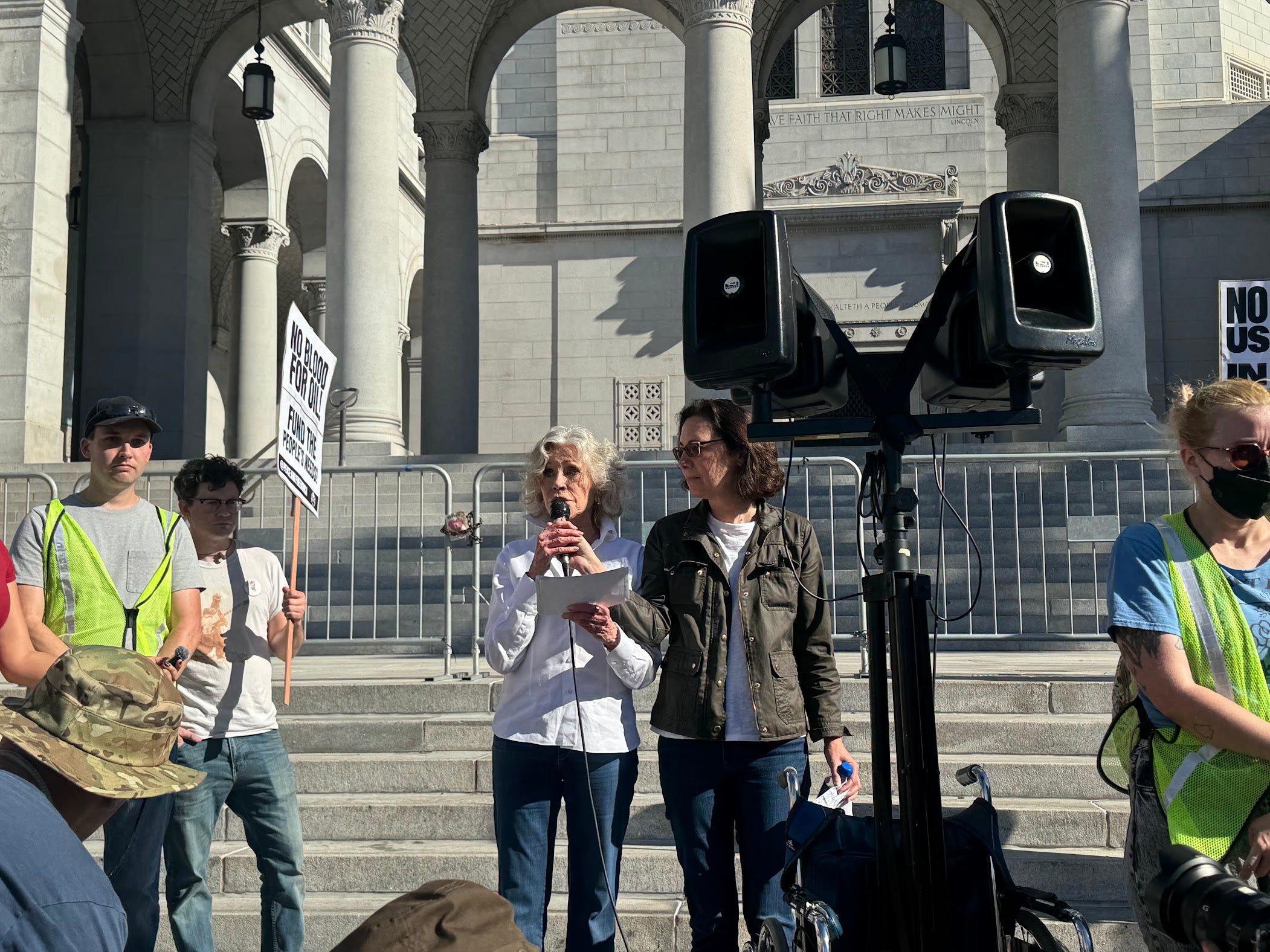
“We, the people of the United States, are here to tell the Trump administration that it may wage this war in our name, but not with our consent,” said actor Jane Fonda at the protest in front of City Hall.
Organizers from both protests announced that this will not be the last time they call for a protest against the war and that they will also take to the streets. In addition, groups across the city will host events and educational forums on U.S. imperialism to help people understand why an anti-war movement is necessary in today’s politics.